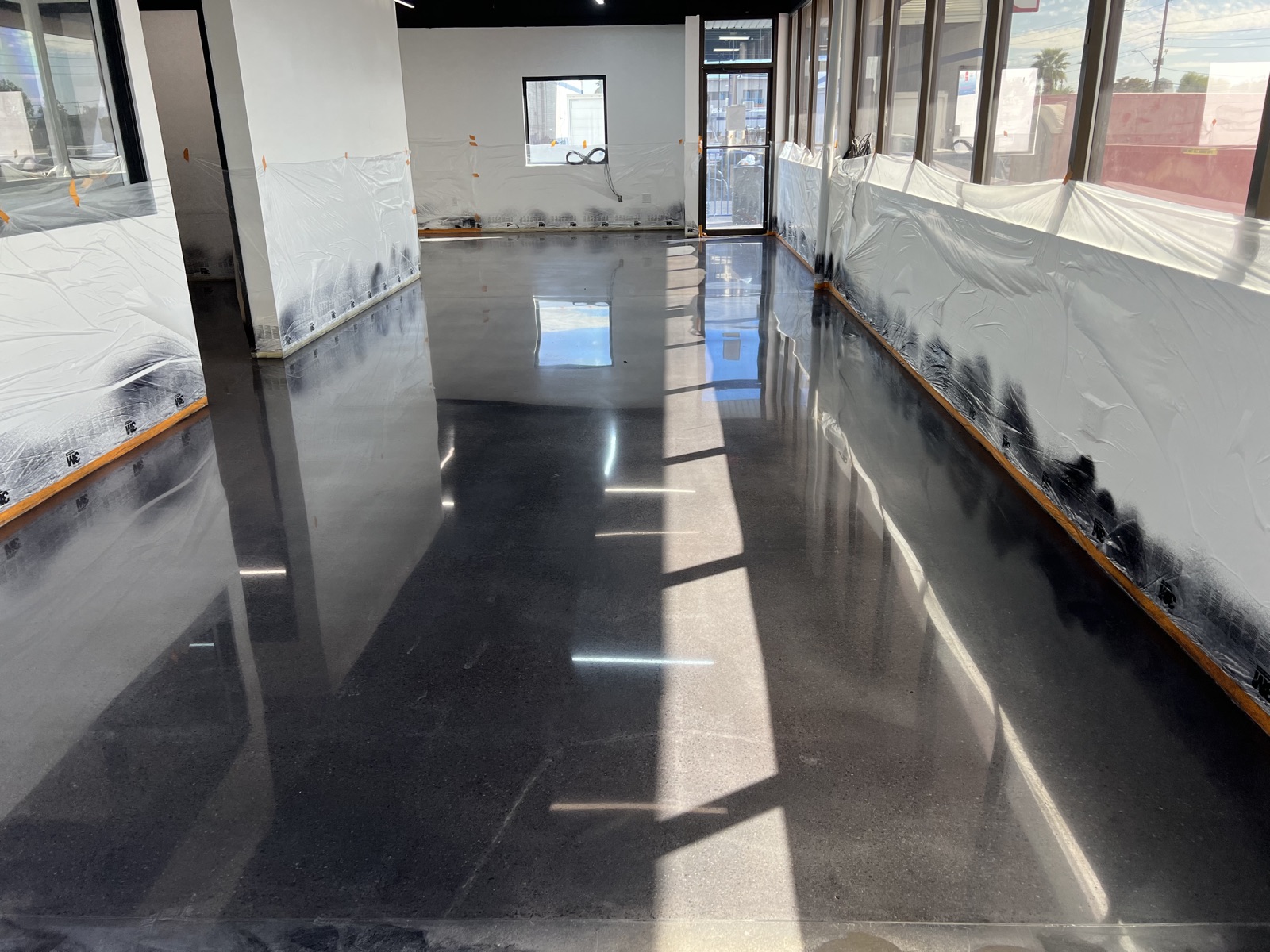
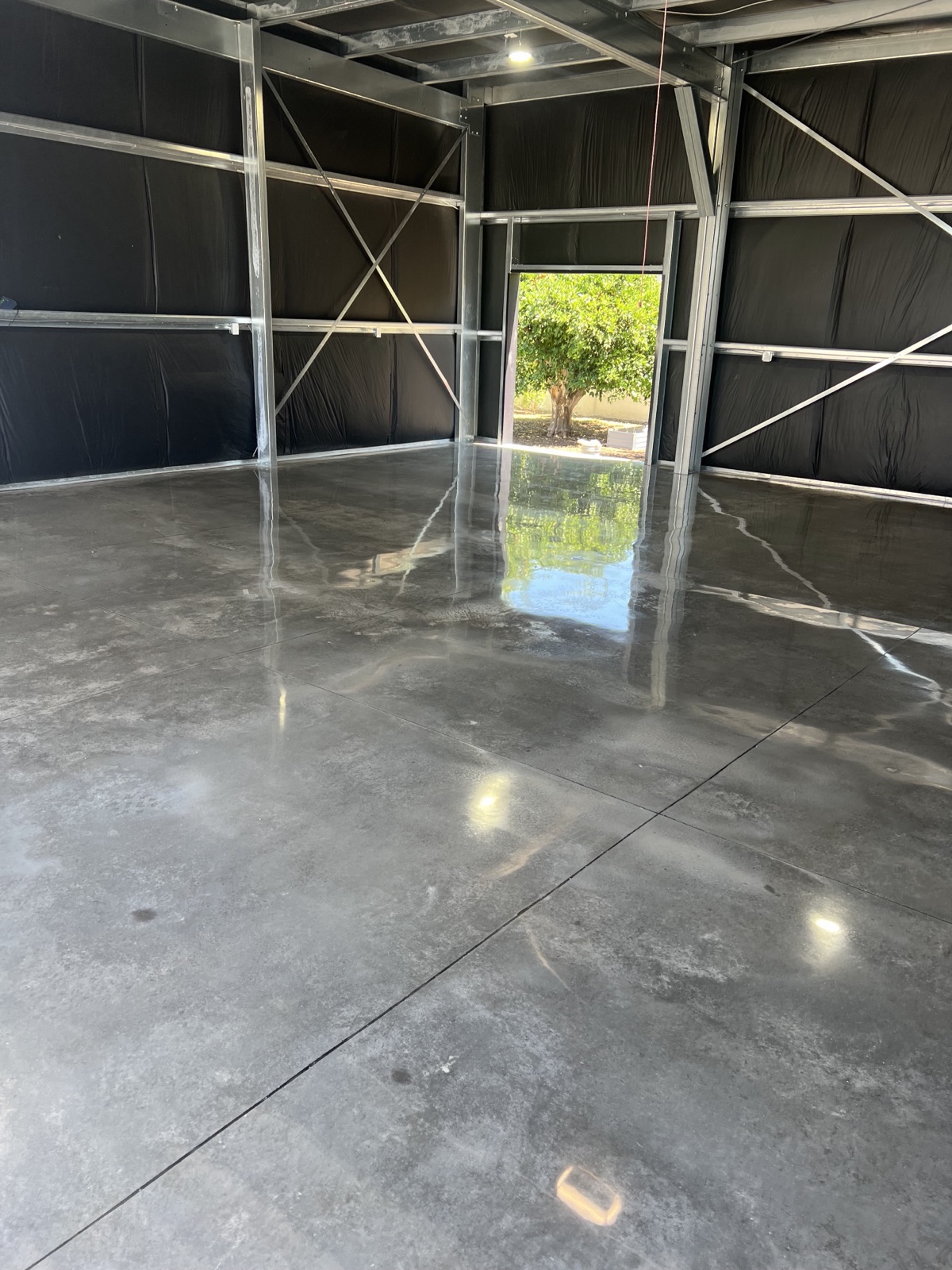
Quick answer: Polished concrete is a finish, not a coating. The existing slab is mechanically ground with progressively finer diamonds, hardened with a chemical densifier, and polished to the gloss level you want. There is nothing applied on top to delaminate, so it holds up to heavy traffic and cleans easily.
For Phoenix retail spaces, offices, schools, and warehouses, polished concrete is often the most cost-effective commercial floor when the slab is in usable condition. You are refining the concrete that is already there instead of installing and maintaining a separate floor covering.
Why commercial clients choose polished concrete
- Extremely durable under foot, cart, and equipment traffic
- No coating layer to peel, chip, or delaminate over time
- Low maintenance — typically dust-mop and occasional damp clean
- Reflective finish that brightens the space and reduces lighting needs
- Gloss level is selectable, from satin matte to high gloss
- A strong fit when the budget rules out a full coating system
Where polished concrete works well
- Retail floors, showrooms, and customer-facing commercial spaces
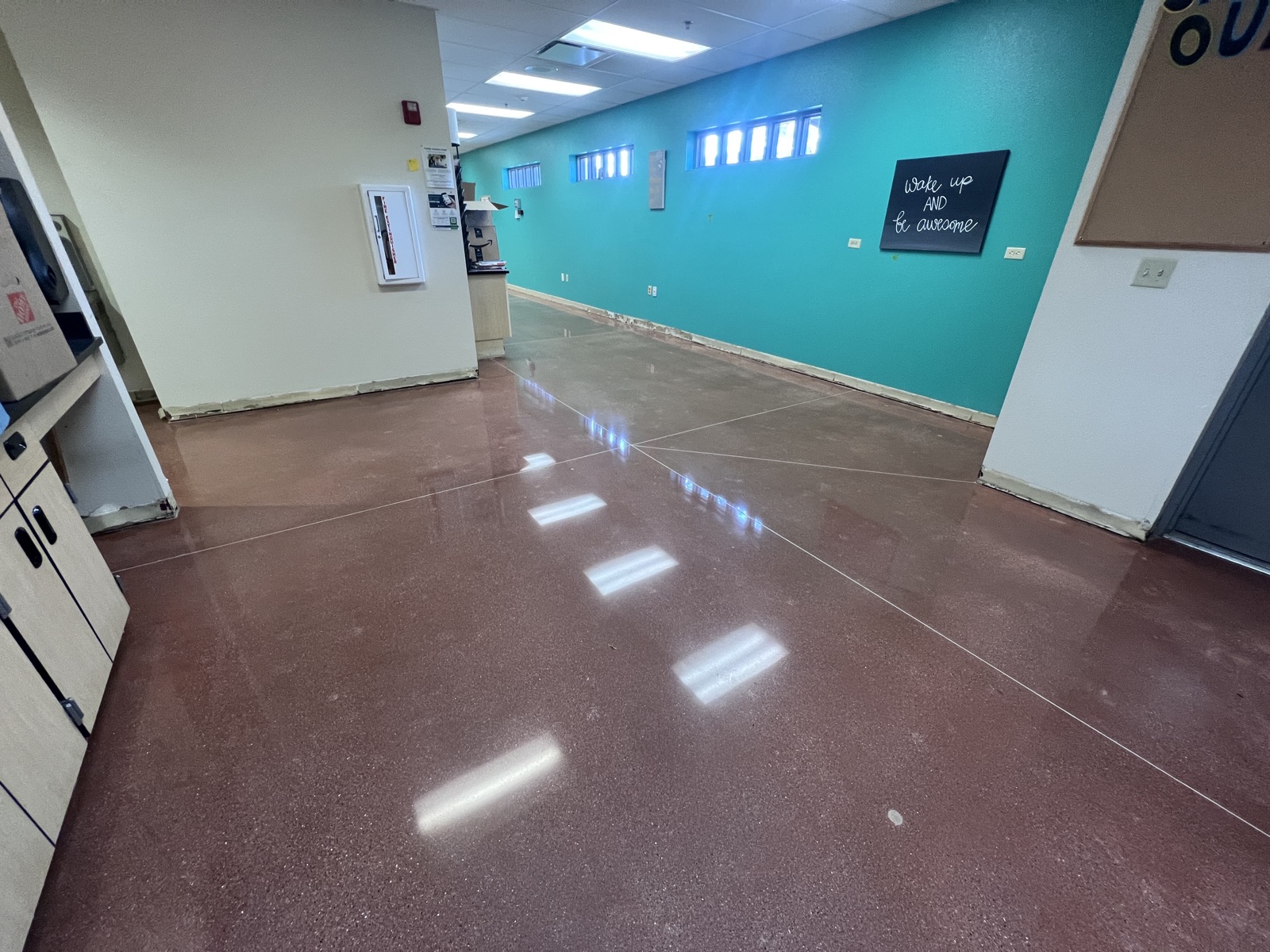
- Offices, lobbies, and corridors
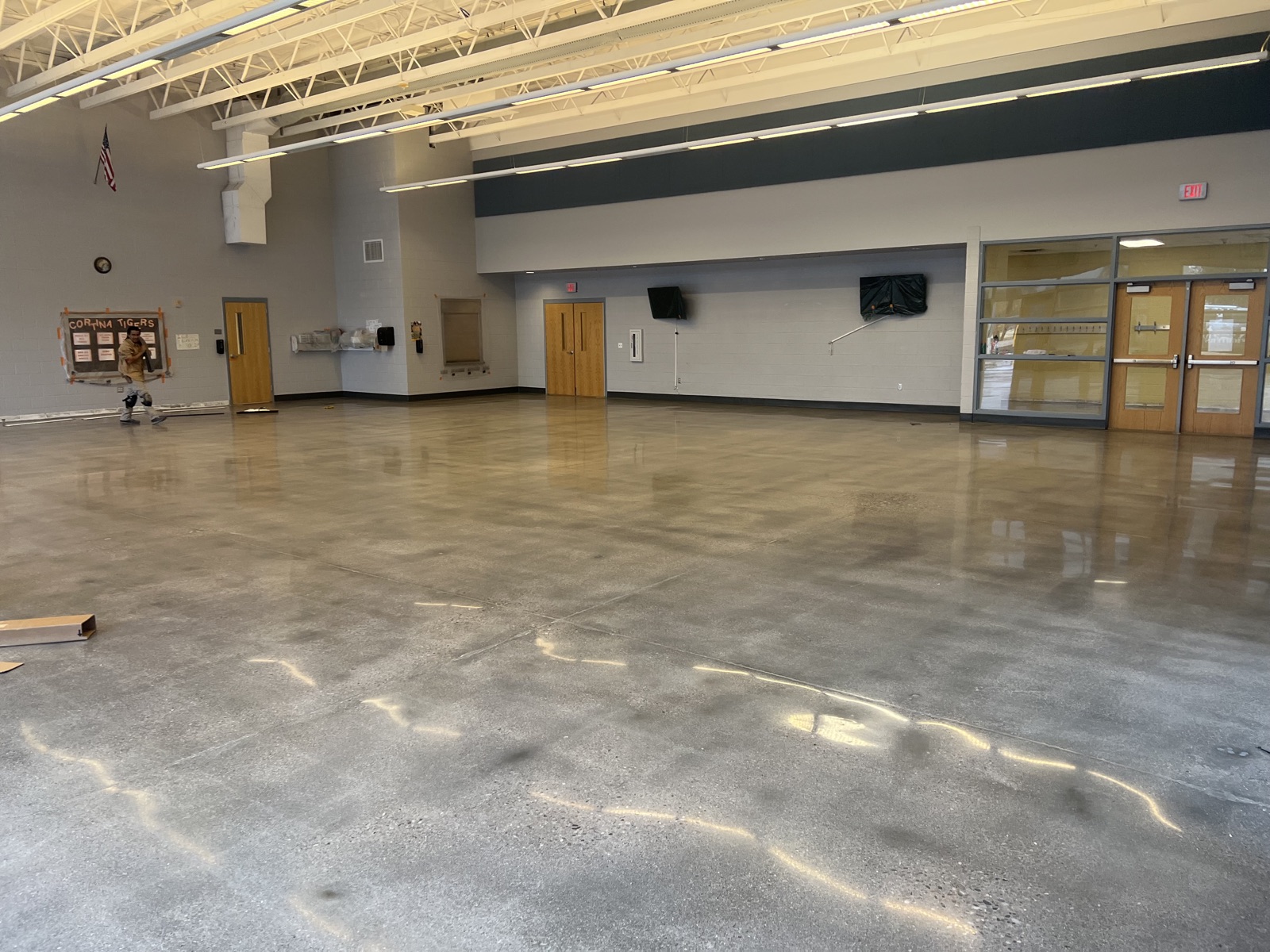
- Schools, cafeterias, and institutional common areas
- Warehouses and light industrial floors in sound condition
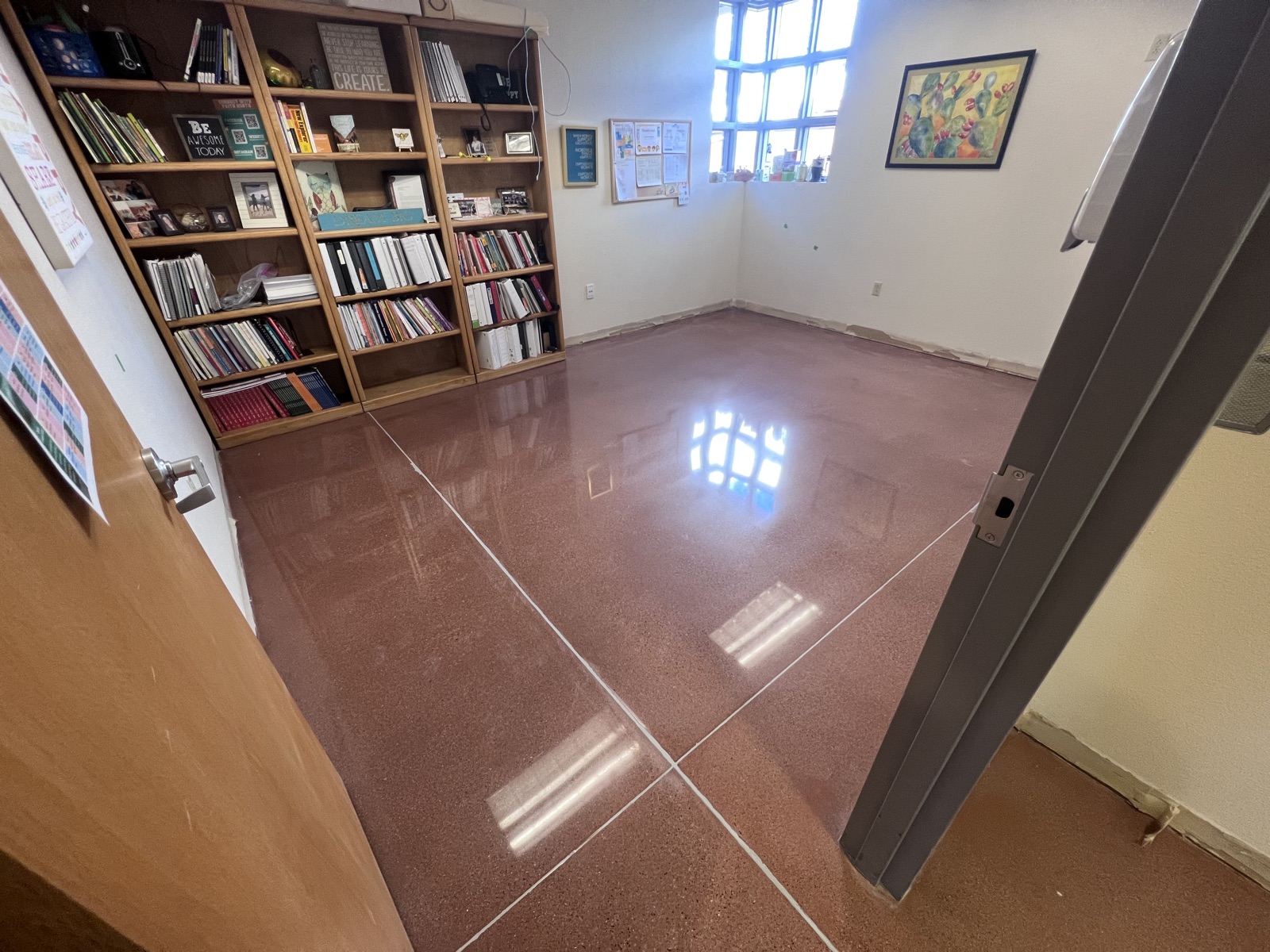
Polished concrete vs. epoxy coating
Polished concrete refines the slab itself; an epoxy or resinous system installs a new wear surface on top. Polished concrete is usually lower maintenance with no risk of coating failure, while epoxy and resinous flake systems offer more color, chemical resistance, and seamless washdown performance. The right choice depends on the slab condition, the look you want, chemical exposure, and budget — which is exactly what the walkthrough is for.